

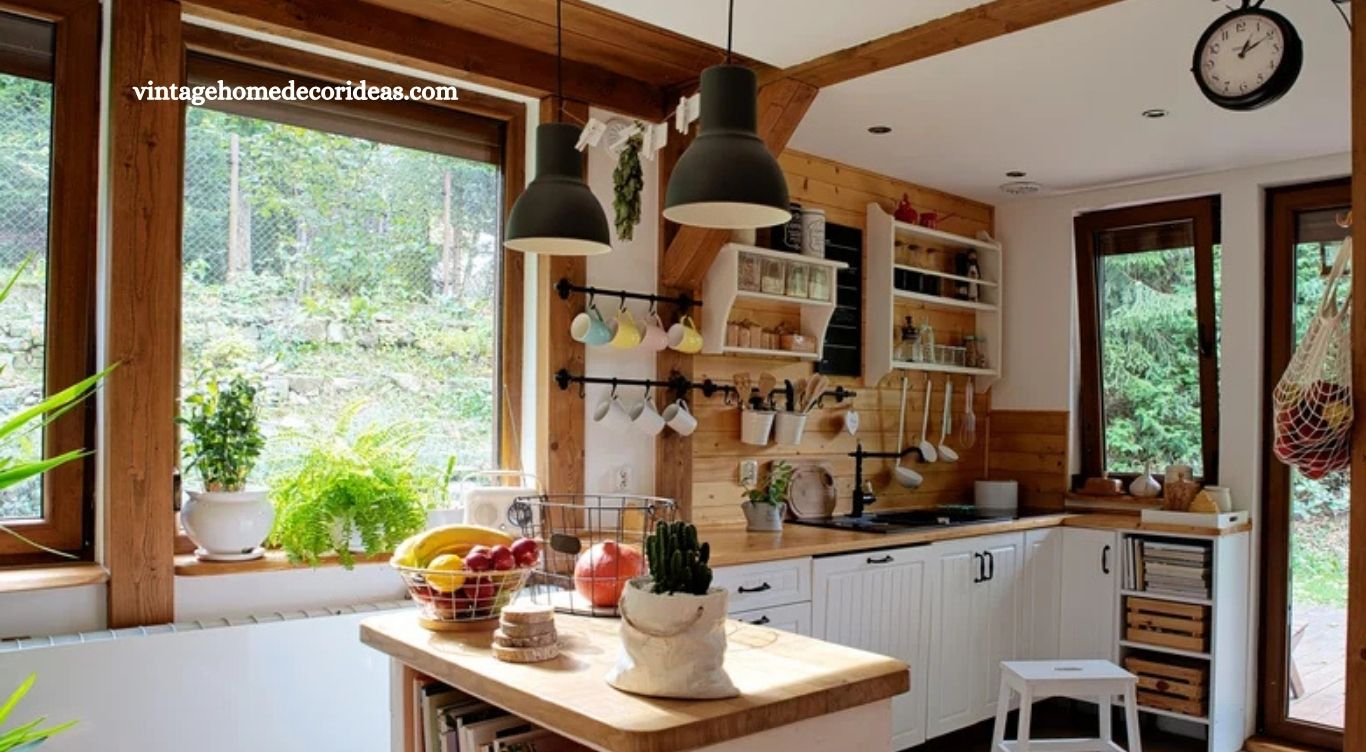
Few spaces feel as warm and nostalgic as grandma’s kitchen. The comforting aromas, traditional cooking methods, wooden details, and personal decorations create a sense of home that modern kitchens often lack. Today, many homeowners are bringing that familiar charm into their own spaces through the growing cottagecore kitchen trend.
Cottagecore celebrates the simple beauty of countryside living, nature, traditional craftsmanship, and a slower lifestyle. Its nostalgic appearance often resembles the kitchens many people remember from their grandparents’ homes. The style is sometimes linked with “grandmacore” because of its vintage character and sentimental appeal.
Retro Appliances and Gadgets Enhance the Aesthetic
Modern smart appliances may not always fit the cottagecore look. When authentic vintage appliances are difficult to find, retro-inspired designs can provide a similar appearance without sacrificing modern functionality.
Read More: Cottagecore Aesthetic: 9 Simple Steps to Embrace This Cozy Decorating Style
Smaller accessories can also make a major difference. Analog kitchen scales, wooden coffee grinders, rotary egg beaters, vintage kettles, and traditional cooking tools can introduce an old-fashioned character without requiring a complete kitchen makeover.
Exposed Wood Brings Cottage Charm
Wood remains one of the most important materials in a cottagecore kitchen. Wooden countertops, exposed beams, shelves, cabinets, and shiplap walls can instantly create a rustic countryside atmosphere.
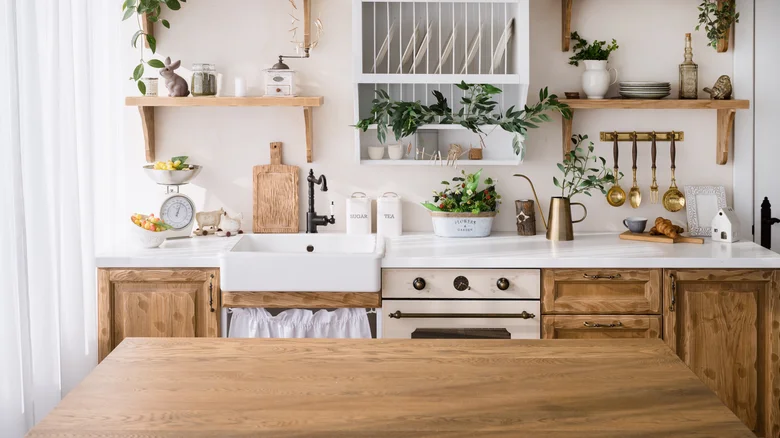
Using different wood finishes can add visual depth and prevent the room from looking too uniform. If you decide to paint some wooden features, leave other sections natural. Exposed wood helps preserve the authentic cabin-inspired feeling that defines cottagecore interiors.
Soft Colors Complement Natural Materials
Color has an important role in cottagecore kitchen design, but softer shades work best. Instead of overwhelming the room with bold colors, choose tones that complement natural wood and other organic materials.
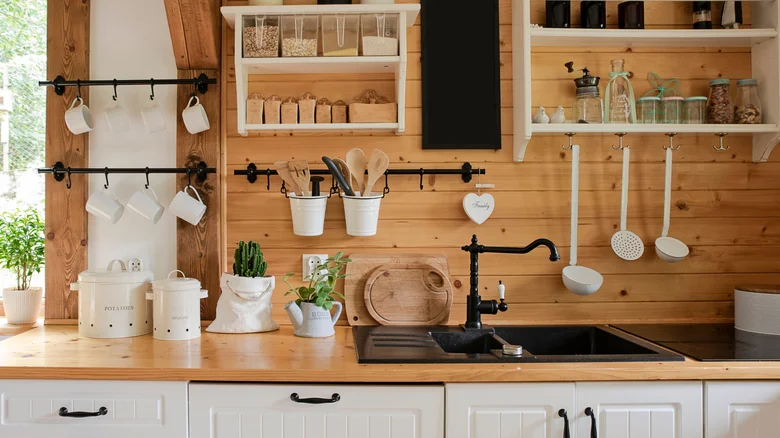
Pastel yellow, cream, soft beige, pale green, and gentle blue can create a welcoming atmosphere. Light shades of yellow, in particular, can give the kitchen a warm and cheerful appearance while keeping the natural materials visually prominent.
Bring Nature Into the Kitchen
A strong connection with nature sits at the heart of cottagecore design. Plants, flowers, herbs, and natural decorations can make a kitchen feel more connected to the outdoors.
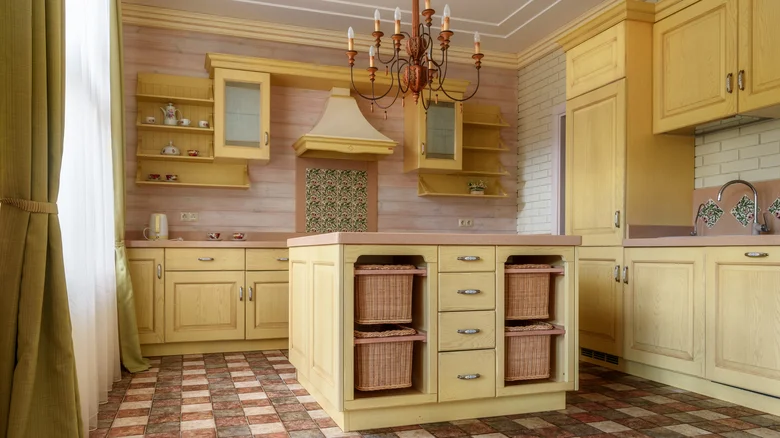
Potted herbs near a window, dried flowers hanging from shelves, and fresh garden blooms can add both beauty and functionality. Growing herbs inside the kitchen also makes cooking feel more traditional and personal.
Choose a Wooden Kitchen Island
A wooden kitchen island can serve as the perfect centerpiece for a cottagecore kitchen. Traditional kitchens relied heavily on sturdy workstations for preparing meals, baking, and organizing ingredients.
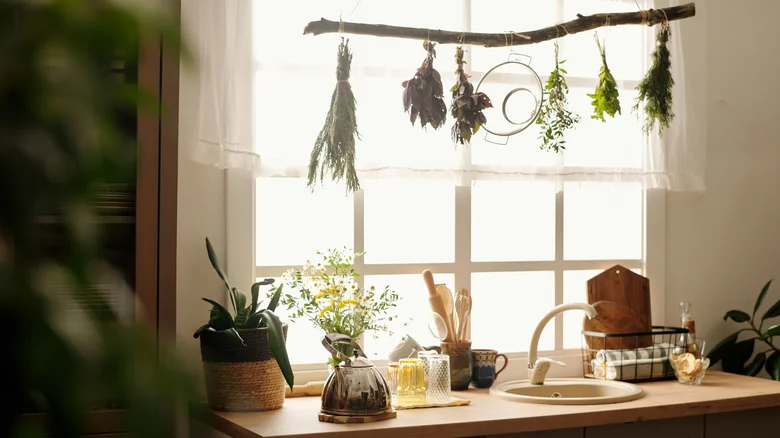
A wooden island provides valuable workspace while adding rustic character. It becomes especially useful for baking, giving you enough room to prepare dough, pastries, cakes, and other homemade recipes.
Add Character With Ornamental Rugs
A decorative kitchen rug can quickly make a plain space feel more inviting. Ornamental patterns work particularly well with cottagecore interiors because they introduce vintage character and visual contrast.
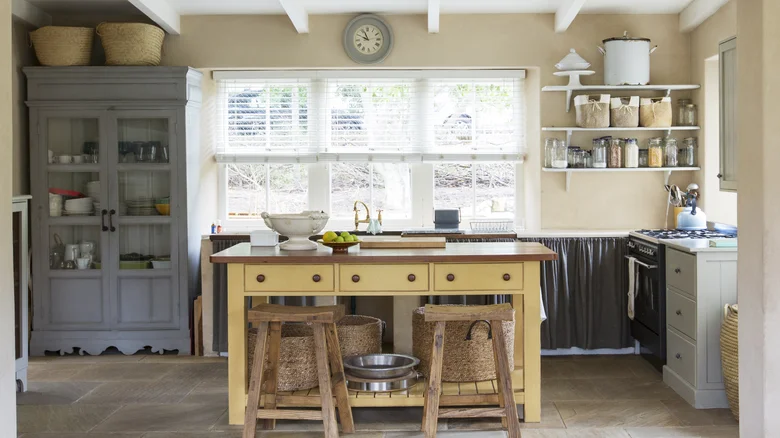
Choose a rug featuring floral, traditional, or countryside-inspired patterns. Richer patterns can also balance softer walls, wooden cabinets, and neutral surfaces while making the kitchen feel more lived-in.
Cooler Tones Can Still Create Cottagecore Warmth
Cottagecore does not require warm colors everywhere. Cooler shades can work beautifully when paired with natural wood and traditional accessories.
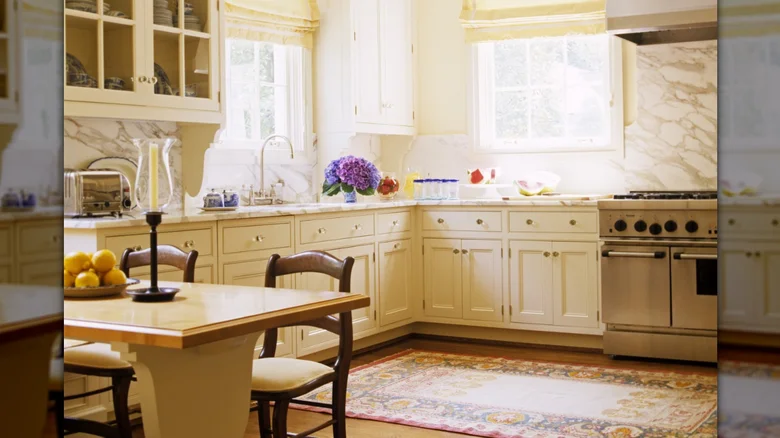
Cloud gray, pale blue, and other muted tones can create a calm atmosphere. Wooden countertops, shelves, copper cookware, iron skillets, and vintage dinnerware can then introduce the warmth needed to keep the space cozy.
Add Sweet Animal Motifs
Animal-inspired decorations can give a cottagecore kitchen a playful, storybook atmosphere. Woodland creatures are particularly suitable for a countryside-inspired interior.
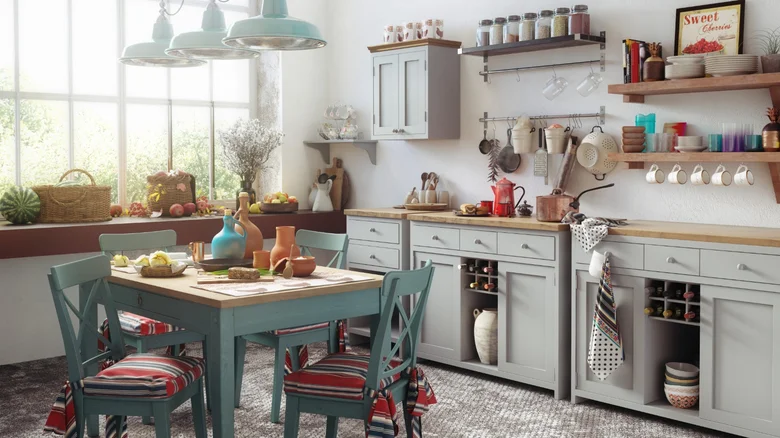
Rabbit, deer, fox, and squirrel motifs can appear on plates, wall art, curtains, towels, ceramic pieces, or small decorative accessories. These details add personality without overwhelming the overall design.
Use Elegant Light Fixtures
Cottagecore kitchens generally favor simple and practical decoration, but a carefully selected light fixture can add a touch of elegance. Wall sconces are an excellent choice because they provide character without making the room feel overly modern.

Warm metallic finishes, particularly antique or golden tones, can complement wooden cabinets and vintage accessories. The key is choosing fixtures with traditional details rather than highly contemporary designs.
Let Natural Light Take Center Stage
Natural light can transform a cottagecore kitchen and strengthen its connection with the outdoors. Large windows provide plenty of sunlight while allowing garden or countryside views to become part of the overall design.
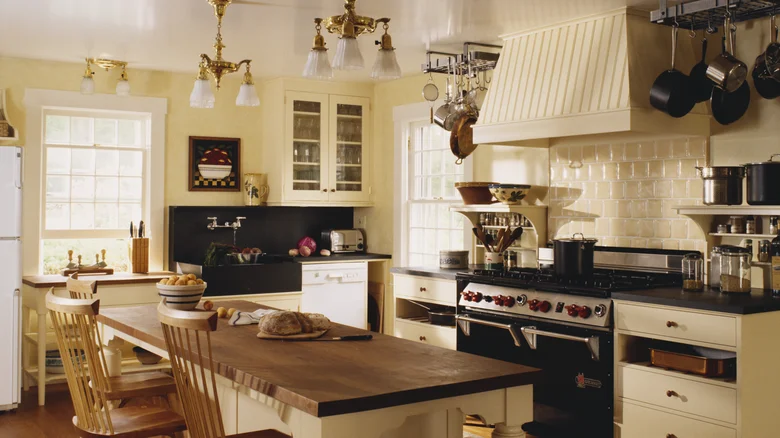
Tall French windows and double-casement windows are especially suitable for this aesthetic. Their traditional appearance pairs naturally with wooden elements, soft colors, plants, and vintage furnishings.
Create a Kitchen Full of Nostalgic Charm
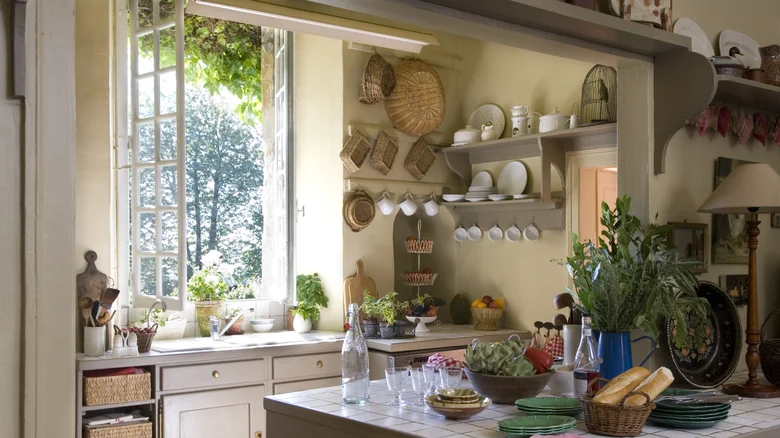
A cottagecore kitchen is less about following strict decorating rules and more about creating a warm, personal environment. Natural wood, vintage gadgets, soft colors, plants, decorative rugs, traditional lighting, and natural sunlight can work together to recreate the comforting atmosphere associated with grandma’s kitchen.
The beauty of cottagecore comes from its imperfections and personal touches. Mixing practical kitchen features with sentimental decorations can create a space that feels authentic, welcoming, and timeless.
Frequently Asked Questions
What is a cottagecore kitchen?
A cottagecore kitchen combines rustic materials, vintage decor, soft colors, plants, and traditional farmhouse charm.
How can I make my kitchen look cottagecore?
Add wooden elements, vintage accessories, floral decor, plants, soft colors, and traditional lighting.
What colors work best in cottagecore kitchens?
Cream, pastel yellow, pale green, soft blue, beige, and light gray work beautifully.
Are modern appliances suitable for cottagecore kitchens?
Yes. Choose retro-inspired appliances or hide modern designs behind traditional cabinetry when possible.
Why is wood important in cottagecore kitchens?
Natural wood adds warmth, rustic character, and the countryside feel associated with cottagecore design.
Can plants be used in a cottagecore kitchen?
Yes. Potted herbs, fresh flowers, and dried plants add natural beauty and strengthen the countryside aesthetic.
What decorations suit a cottagecore kitchen?
Vintage cookware, patterned rugs, animal motifs, antique-style lighting, ceramic pieces, and sentimental accessories work well.
Conclusion
A cottagecore kitchen brings together warmth, nostalgia, nature, and timeless design to create a space that feels genuinely welcoming. Unlike modern kitchens that often focus on clean lines, minimal decoration, and advanced appliances, cottagecore celebrates character, comfort, and the beauty of traditional living.

1 Comment
Pingback: Is Farmhouse Style Losing Its Appeal? Designers Weigh In - Vintage Home Decor