

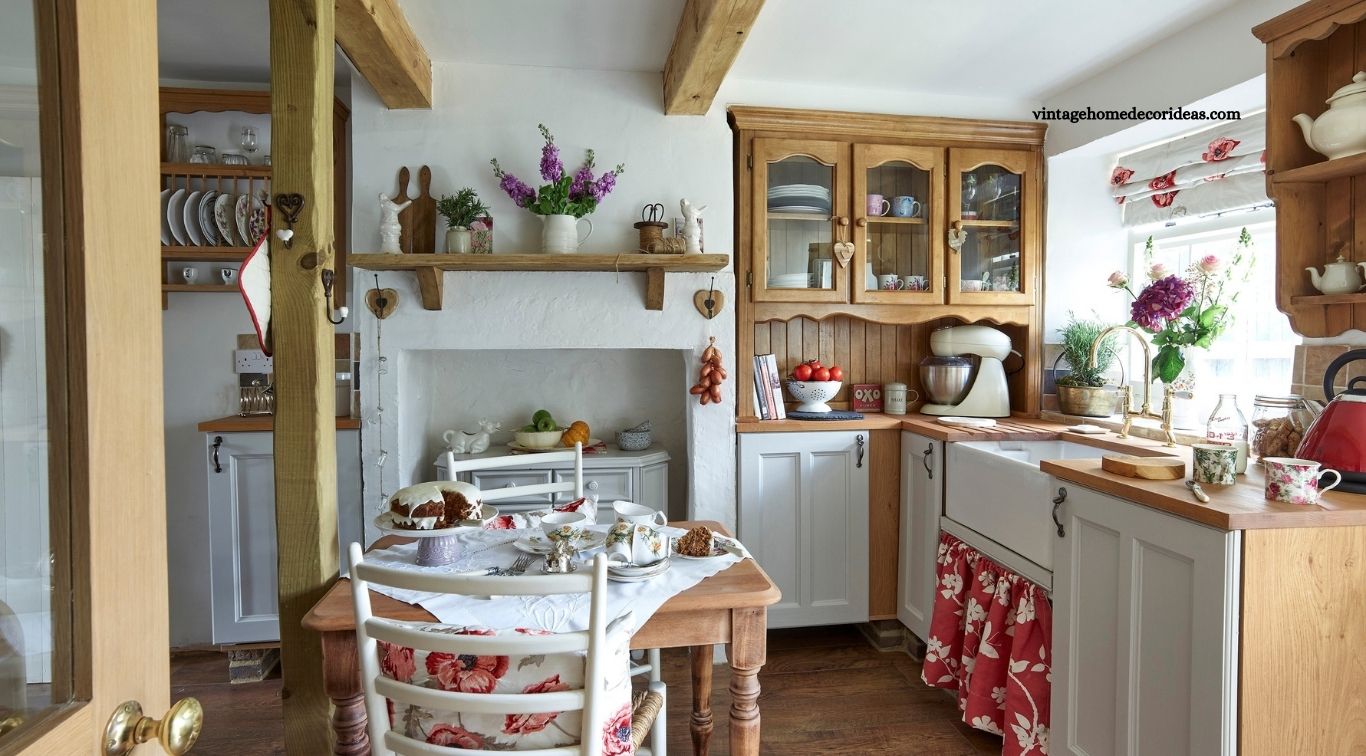
A vintage cottage kitchen combines rustic beauty, timeless details, and everyday comfort to create a welcoming country-inspired space. Natural wood, soft colors, traditional cabinets, floral fabrics, and antique accessories help create a kitchen that feels warm, personal, and full of character. Unlike modern kitchens that often emphasize sleek surfaces and minimal decoration, cottage kitchens celebrate texture, craftsmanship, and charming imperfections.
You do not need a farmhouse or a large kitchen to enjoy this decorating style. A few thoughtful changes, such as painting cabinets, adding open shelves, displaying vintage dishes, or introducing warm lighting, can transform an ordinary kitchen. Whether you prefer a classic English cottage look or a relaxed rustic interior, these vintage cottage kitchen ideas can help you create a charming space that remains practical for everyday cooking.
Read More: Beautiful Cottage Style Decorating Ideas on a Budget
Choose Soft Cottage Kitchen Colors
Color plays an important role in creating a vintage cottage kitchen. Cream, warm white, sage green, pale blue, butter yellow, and muted pink are popular choices because they create a gentle atmosphere. These shades work beautifully on cabinets, walls, kitchen islands, and decorative details without overwhelming the space.
For a traditional country look, combine one main color with natural wood and a few contrasting accents. Sage green cabinets with wooden countertops can feel earthy and timeless, while cream cabinets paired with brass handles create a softer, classic appearance. Keep the palette consistent across larger surfaces and introduce additional colors through textiles, pottery, flowers, and artwork.
Install Traditional Wooden Cabinets
Wooden cabinets can bring natural warmth and character to a cottage kitchen. Oak, pine, and other wood finishes work well with rustic interiors, while painted timber cabinets offer a lighter, more traditional appearance. Shaker-style doors, simple paneling, and decorative molding can help create a classic look without making the kitchen feel overly formal.
If replacing cabinets is outside your budget, consider refreshing the existing ones. A new coat of paint, traditional handles, or carefully chosen hinges can make a noticeable difference. Slightly distressed finishes may suit a vintage aesthetic, but avoid damaging surfaces unnecessarily. A well-maintained kitchen can still feel charming without making every cabinet appear artificially aged.
Add Open Shelving for a Rustic Feel
Open shelving is a practical way to introduce cottage character while displaying everyday kitchen essentials. Wooden shelves can hold ceramic plates, glass jars, cups, cookbooks, and small decorative objects. The combination of useful items and attractive materials gives the kitchen a relaxed, lived-in appearance.
Arrange items in a way that balances beauty with convenience. Keep frequently used dishes within easy reach and reserve higher shelves for decorative pieces. Mixing white ceramics with patterned plates, wooden bowls, and clear glass containers creates variety without visual clutter. If open shelves are installed near cooking areas, clean them regularly because grease and dust can accumulate.
Choose a Farmhouse Sink
A traditional farmhouse sink can become a striking feature in a vintage cottage kitchen. Deep basins, apron-front designs, and classic white finishes complement wooden cabinets and country-inspired accessories. The generous basin can also make washing large cookware and preparing ingredients more convenient.
You can create a similar traditional effect with other deep, classic sink designs if an apron-front model does not suit your budget or countertop layout. Choose a durable material that matches your daily needs, and consider the installation requirements before purchasing. Traditional bridge-style faucets or simple brushed-metal fixtures can complete the look without sacrificing functionality.
Decorate With Vintage Kitchen Accessories
Vintage accessories help make a cottage kitchen feel personal rather than showroom-perfect. Antique-style clocks, ceramic pitchers, enamel containers, wooden cutting boards, traditional scales, and old-fashioned canisters can introduce character without requiring major renovations.
The secret is to display accessories selectively. A ceramic pitcher filled with flowers, a small collection of vintage tins, or a wooden tray beside the stove can create a charming focal point. Choose objects that are useful, meaningful, or visually appealing rather than filling every available surface. This approach keeps the kitchen inviting and easier to clean.
Use Floral Curtains and Country Fabrics
Floral fabrics are a classic feature of cottage interiors. Small botanical prints, delicate roses, gingham checks, and subtle stripes can soften the kitchen and add traditional country charm. These patterns work well on café curtains, seat cushions, table runners, and decorative tea towels.
To keep the design balanced, combine patterned fabrics with plain walls and simple cabinet finishes. For example, sage green cabinets can pair beautifully with cream curtains featuring small flowers. If the kitchen is already visually busy, choose one patterned textile and repeat its colors in a few smaller accessories rather than introducing several competing prints.
Create a Beautiful Wooden Countertop Look
Wooden countertops add warmth and natural texture to vintage cottage kitchens. Their appearance complements painted cabinets, open shelves, ceramic accessories, and traditional hardware. Depending on the wood species and finish, they can create anything from a light Scandinavian-inspired cottage look to a deeper, rustic country atmosphere.
Real wood requires appropriate maintenance, especially near sinks and other wet areas. Follow the manufacturer’s care instructions, wipe up spills promptly, and maintain the finish as recommended. If you prefer less maintenance, consider durable countertop alternatives with a wood-inspired appearance. The goal is to achieve a welcoming visual effect while choosing a surface that suits your cooking habits.
Add a Classic Range or Cooker
A traditional range cooker can give a cottage kitchen a strong focal point. Rounded edges, classic knobs, contrasting enamel finishes, and a carefully designed backsplash can help create the appearance of an old-fashioned country kitchen. A cooker in cream, dark green, navy, or black can work especially well with soft cabinetry.
You do not need to replace a functional appliance to achieve this look. Instead, emphasize the cooking area with decorative tiles, a traditional-looking extractor hood, wooden utensils, or a simple shelf for everyday essentials. Always ensure that ventilation, electrical connections, and clearances meet the appliance manufacturer’s requirements and local safety rules.
Choose Vintage-Inspired Lighting
Lighting can transform the mood of a cottage kitchen, especially during evenings. Pendant lights, traditional wall sconces, lantern-style fixtures, and simple glass shades can provide character while illuminating important work areas. Brass, aged bronze, and matte finishes often complement classic country interiors.
Use several layers of lighting rather than relying on a single ceiling fixture. Pendant lights can illuminate an island or dining table, while under-cabinet lighting improves visibility on countertops. Warm-toned light can create a cozy atmosphere, but task areas still need sufficient brightness for safe food preparation. Select fixtures suited to the kitchen’s moisture conditions and installation requirements.
Display Ceramic Plates and Pottery
Ceramics are ideal for creating a vintage cottage kitchen because they combine practical use with decorative appeal. White plates, floral teacups, handmade bowls, stoneware jugs, and colorful serving dishes can add subtle variety to open shelves or glass-front cabinets.
Try grouping pottery by color, shape, or purpose, so the display feels intentional. A collection of cream dishes can create a quiet, traditional look, while a mixture of blue-and-white ceramics introduces a more classic country feel. Display fragile or rarely used pieces away from busy cooking areas, and keep everyday items accessible for regular use.
Bring Fresh Flowers and Greenery Indoors
Flowers and plants can make a cottage kitchen feel fresh and connected to nature. Seasonal blooms in a simple glass jar, herbs in small pots, or greenery arranged in a ceramic container can introduce color without requiring expensive decorations. Fresh flowers look particularly attractive beside a window or on a wooden dining table.
Choose plants according to the light and humidity available in your kitchen. Herbs such as basil, mint, and parsley can be useful when the conditions suit them, while low-maintenance decorative plants can provide greenery elsewhere. Keep plants away from direct heat, and ensure that containers drain properly to protect wooden surfaces.
Use Brick, Stone, or Patterned Backsplashes
Natural materials can add texture and an authentic country feel to a vintage cottage kitchen. Exposed brick, stone surfaces, traditional ceramic tiles, and softly patterned backsplashes all work well with painted cabinets and wooden details. Even a small backsplash can become a feature when its color and pattern complement the rest of the room.
If a full renovation is not practical, consider updating only the area behind the stove or sink. Simple white tiles with traditional grout colors create a timeless look, while decorative tiles can introduce personality. Choose materials that are suitable for kitchen use and easy to clean, especially around cooking and food-preparation areas.
Add a Cozy Breakfast Nook
A breakfast nook can turn an unused corner into one of the most charming parts of a cottage kitchen. A small wooden table, a traditional bench, comfortable cushions, and soft window treatments can create an inviting place for morning coffee, casual meals, or family conversations.
The arrangement should suit the available space rather than make the kitchen feel crowded. A round table may improve movement in a compact room, while a built-in bench can provide additional seating and storage. Add a small vase, a simple pendant light, or a patterned cushion to complete the look without overcrowding the dining area.
Mix Antique Furniture With Modern Convenience
A cottage kitchen does not need to rely entirely on old-fashioned furniture and appliances. An antique dresser, wooden sideboard, vintage table, or traditional stool can introduce character while modern refrigerators, dishwashers, and cooking appliances provide everyday convenience.
The key is to make the combination feel intentional. Repeat colors or materials across old and new pieces so the room feels connected. For example, wooden furniture can complement modern appliances with understated finishes, while traditional cabinet handles can tie together different elements. This approach allows the kitchen to feel nostalgic without sacrificing comfort or efficiency.
Create a Budget-Friendly Vintage Kitchen
Creating a vintage cottage kitchen does not require a complete renovation or expensive antiques. Start with small changes such as replacing cabinet handles, adding patterned curtains, displaying existing ceramics, painting a shelf, or introducing a wooden tray. These details can gradually transform the room without putting unnecessary pressure on your budget.
Secondhand markets, thrift stores, family heirlooms, and DIY projects can provide affordable decorating options. Before buying anything new, look at the items you already own and consider how they could be displayed differently. Spend more carefully on surfaces, lighting, and fittings that need to withstand regular use, then add decorative details over time.
Frequently Asked Questions
What colors are best for a vintage cottage kitchen?
Cream, warm white, sage green, pale blue, butter yellow, and muted pink are excellent choices. They create a soft country atmosphere and work beautifully with wood and traditional accessories.
How can I make my kitchen look vintage on a budget?
Refresh cabinet paint, replace handles, add floral curtains, display ceramic dishes, reuse wooden furniture, and shop for secondhand accessories instead of renovating the entire kitchen.
What materials work best in cottage kitchens?
Wood, ceramic tile, stone, enamel, linen, cotton, and traditional metal finishes work well. Choose durable, easy-to-maintain materials for surfaces exposed to water, heat, and frequent use.
Are open shelves practical for a cottage kitchen?
Yes. Open shelves keep frequently used dishes accessible and provide decorative space, but they require regular cleaning and thoughtful organization to prevent dust and grease buildup.
Which lighting suits a vintage cottage kitchen?
Traditional pendant lights, glass shades, wall sconces, and warm-toned bulbs complement cottage interiors. Combine ambient lighting with bright task lighting for safe food preparation.
Can a small kitchen have a cottage style?
Absolutely. Use light colors, compact wooden furniture, a few vintage accessories, simple floral fabrics, and well-planned storage to create cottage charm without overcrowding the room.
Conclusion
Vintage cottage kitchen ideas offer a beautiful way to combine traditional country charm with practical everyday living. Soft colors, wooden cabinets, open shelving, floral fabrics, ceramic accessories, warm lighting, and natural materials can transform an ordinary kitchen into a welcoming space filled with character. The best designs balance decorative details with convenient storage, comfortable movement, and easy maintenance. You do not need to recreate a perfect farmhouse interior to achieve the look. Begin with a few elements that suit your home, budget, and personal taste, then build the design gradually.

1 Comment
Pingback: Cottage Style Bedroom Ideas for a Cozy and Romantic Retreat - Vintage Home Decor