

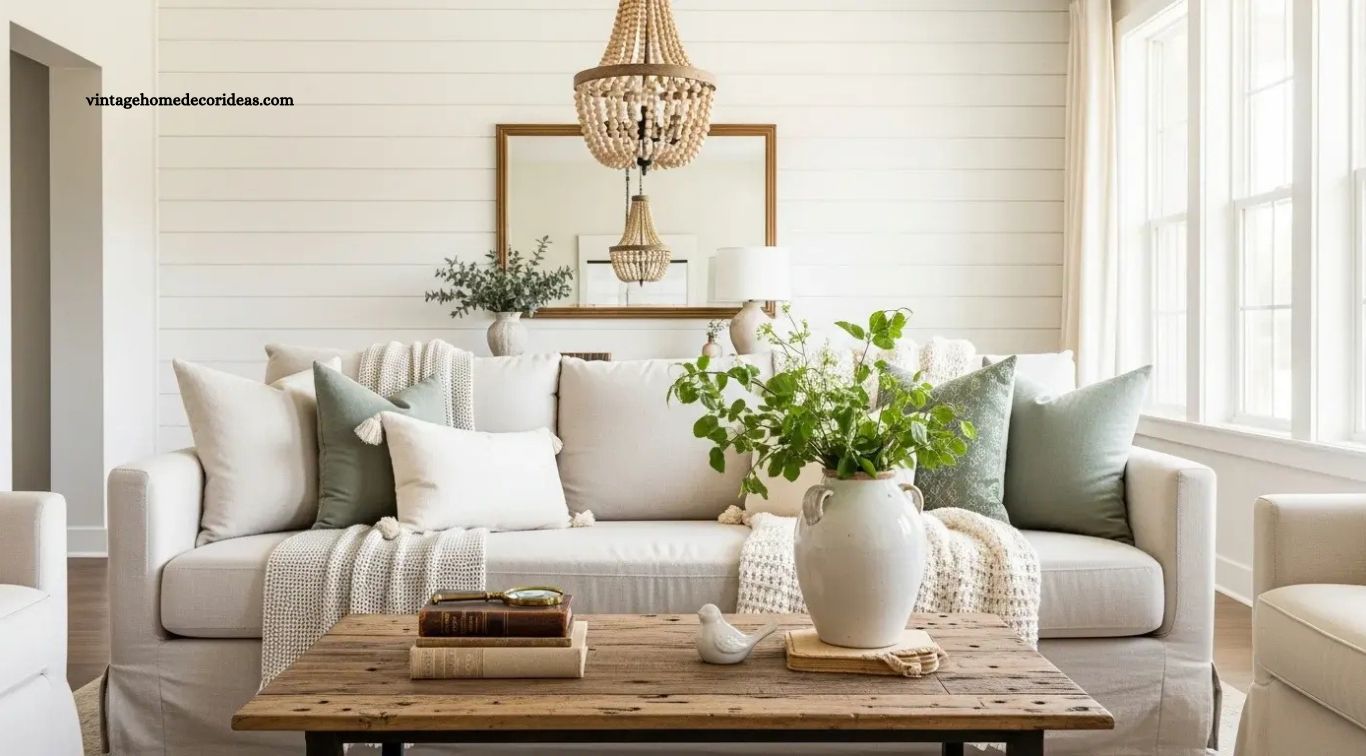
Farmhouse style remains a popular interior design choice because it combines natural materials, comfortable furniture, and charming details to create a welcoming home. Inspired by traditional country houses, this decorating approach blends rustic textures with practical layouts and timeless colors. Whether you live in a modern apartment or a spacious countryside home, farmhouse decor can add warmth and personality to almost any room.
The best farmhouse style ideas focus on simplicity, natural beauty, and thoughtful decoration. Wooden furniture, neutral color palettes, vintage accessories, soft textiles, and cozy lighting help create a balanced interior without making the space feel cluttered. By combining traditional elements with modern conveniences, you can design a home that feels comfortable, elegant, and inviting for years to come.
Read More: 25 Vintage Farmhouse Decor Ideas for a Cozy Home
Choose a Warm Neutral Color Palette
Neutral colors create the perfect foundation for farmhouse interiors. Shades of warm white, cream, beige, soft gray, and earthy brown help rooms feel bright and peaceful. These colors work well with wooden furniture, natural fabrics, and rustic accessories, allowing different design elements to complement one another without competing for attention.
For a more inviting atmosphere, combine several neutral shades instead of using the same color everywhere. Cream walls can pair beautifully with beige curtains, a warm gray sofa, and natural wood accents. Small touches of olive green, muted blue, or terracotta can introduce color while preserving the timeless farmhouse aesthetic.
Add Natural Wood Furniture
Natural wood is one of the defining features of farmhouse interior design. Dining tables, coffee tables, bed frames, shelving, and cabinets made from oak, pine, or reclaimed wood bring texture and character into a room. Visible grain, subtle imperfections, and weathered finishes help create the relaxed appearance associated with traditional country homes.
You do not need to fill every room with heavy wooden furniture to achieve this look. Choose a few statement pieces, such as a rustic dining table or a reclaimed wood console, and balance them with lighter furniture and neutral walls. Mixing different wood tones can also create depth, provided the finishes complement the overall color scheme.
Create a Cozy Farmhouse Living Room
A farmhouse living room should feel comfortable, practical, and easy to enjoy. Start with a soft sofa, textured cushions, a warm rug, and a wooden coffee table. Neutral upholstery provides a versatile base, while knitted throws, linen fabrics, and woven baskets introduce the layered textures that make farmhouse spaces feel inviting.
Arrange furniture to encourage conversation and relaxation rather than focusing only on appearance. A vintage-inspired side table, simple wall art, or a few ceramic accessories can complete the room without overcrowding it. If the space includes a fireplace, decorate the mantel with understated objects, greenery, and natural materials to create a welcoming focal point.
Use Shiplap and Textured Wall Finishes
Shiplap is a classic farmhouse design feature that adds subtle texture to interior walls. Horizontal wooden boards painted white or cream can make a room feel brighter and more connected to traditional country architecture. Shiplap works particularly well in living rooms, bedrooms, entryways, and kitchens where a simple feature wall can add visual interest.
If traditional wood paneling does not suit your budget or style, consider alternatives such as beadboard, limewash paint, textured wallpaper, or carefully chosen wall molding. These finishes can create a similar sense of character without requiring a complete renovation. Use textured walls selectively to maintain balance and prevent smaller rooms from feeling visually crowded.
Design a Farmhouse Kitchen With Rustic Charm
A farmhouse kitchen combines practical storage with natural finishes and timeless details. Shaker-style cabinets, wooden countertops or islands, ceramic accessories, and simple hardware can create a classic appearance. White or cream cabinetry keeps the space bright, while darker handles and warm wood surfaces add contrast and personality.
Open shelving can display everyday dishes, glass jars, wooden cutting boards, and a few decorative pieces. However, it works best when the items remain organized and easy to reach. For a modern farmhouse kitchen, combine traditional cabinet styles with contemporary appliances, durable surfaces, and efficient storage solutions that support daily cooking.
Bring Vintage Accessories Into Your Decor
Vintage accessories give farmhouse interiors a sense of history and individuality. Antique mirrors, old picture frames, wooden trays, ceramic pitchers, woven baskets, and distressed furniture can make a room feel collected over time. These objects also introduce subtle imperfections that contrast beautifully with clean walls and simple modern furnishings.
You can find suitable accessories at thrift stores, flea markets, antique shops, or secondhand marketplaces. Choose pieces that serve a purpose or have personal meaning instead of buying decorations simply to fill empty spaces. A few carefully selected vintage items often create more impact than a large collection of unrelated accessories.
Layer Soft Textiles for Extra Comfort
Soft textiles help transform a farmhouse interior into a cozy and welcoming environment. Linen curtains, cotton bedding, textured cushion covers, wool throws, and natural-fiber rugs add comfort while creating visual depth. These materials work particularly well in neutral interiors because their different textures provide interest without relying on strong colors or busy patterns.
Layering textiles does not mean using every pattern and fabric together. Begin with a simple base, then add two or three complementary textures. For example, a cream sofa can feature linen cushions, a knitted throw, and a jute rug. In bedrooms, cotton bedding paired with a quilt and soft curtains creates a relaxed atmosphere that feels timeless rather than overly styled.
Install Warm and Inviting Lighting
Lighting plays an important role in making farmhouse interiors feel comfortable. Pendant lights, wall sconces, table lamps, and floor lamps with metal, glass, or natural finishes can add character while providing practical illumination. Warm-toned bulbs generally create a softer atmosphere than harsh, cool lighting, particularly in living rooms and bedrooms.
Combine different lighting sources to make each room more functional. Ceiling lights can illuminate the entire space, while table lamps provide focused light for reading and relaxing. In kitchens, pendant lights above an island can serve as both a practical feature and a decorative focal point. Whenever possible, use natural daylight to enhance the warmth of wood and neutral finishes.
Decorate With Natural Greenery
Plants and fresh greenery bring life into farmhouse interiors. Olive branches, eucalyptus stems, seasonal flowers, and leafy houseplants introduce organic shapes that complement wood, linen, stone, and ceramic materials. Greenery also provides a gentle contrast against white walls and neutral furniture without disrupting the calm color palette.
Choose plants according to the available light, room conditions, and maintenance requirements. Place a larger plant beside a sofa, arrange fresh stems in a ceramic vase, or display small plants on open shelving. If live plants are impractical, high-quality artificial greenery can provide a similar decorative effect. Keep arrangements simple so they enhance the room rather than overwhelm it.
Create a Timeless Farmhouse Bedroom
A farmhouse bedroom should feel peaceful, comfortable, and uncluttered. A wooden or upholstered bed, soft neutral bedding, bedside tables, and warm lighting create a relaxing foundation. Natural materials such as cotton, linen, and wood help the space feel grounded, while subtle patterns add personality without making the room visually busy.
Consider adding a quilt, a textured throw, simple framed artwork, or a vintage-inspired mirror to complete the design. Matching furniture is not essential; a pair of complementary bedside tables can give the room a more collected appearance. Keep storage practical and surfaces relatively clear to maintain a calm atmosphere that supports rest.
Mix Modern and Traditional Farmhouse Elements
Modern farmhouse style combines the warmth of rustic design with the simplicity of contemporary interiors. Traditional wooden furniture, vintage accessories, and natural textures can sit comfortably alongside clean-lined sofas, modern lighting, and streamlined cabinetry. This combination keeps the home from feeling outdated while preserving the character that makes farmhouse decor appealing.
The key is to maintain a consistent balance between old and new. Pair a rustic dining table with simple modern chairs, or place a contemporary sofa beside a reclaimed wood coffee table. Repeating a few colors and materials throughout the room helps the different styles feel connected rather than mismatched.
Use Open Shelving and Practical Storage
Open shelving is a useful way to display attractive everyday objects while maintaining the relaxed character of farmhouse interiors. Wooden shelves can hold books, ceramics, glass jars, framed photographs, and small plants. When arranged thoughtfully, these items add personality and make frequently used belongings easy to access.
Practical storage is equally important for keeping the home organized. Woven baskets, wooden cabinets, storage benches, and furniture with hidden compartments can reduce clutter without sacrificing style. Avoid filling every shelf or basket. Leaving some open space creates a cleaner appearance and allows individual decorative pieces to stand out.
Add Rustic Details to the Dining Area
A farmhouse dining area often centers on a sturdy wooden table that encourages family meals and social gatherings. Pair it with comfortable chairs, a simple pendant light, and understated table accessories. Natural wood, neutral fabrics, and durable finishes create a setting that feels welcoming without requiring elaborate decoration.
For a finishing touch, use a linen runner, ceramic serving pieces, fresh flowers, or a wooden centerpiece. Vintage chairs can add character, while a built-in bench can help maximize seating in smaller rooms. Keep decorations low and practical so the table remains comfortable to use for everyday meals as well as special occasions.
Bring Farmhouse Charm Into Small Spaces
Farmhouse style can work beautifully in small apartments, compact bedrooms, and narrow entryways. Light wall colors, mirrors, simple furniture, and natural textures help create an open and airy appearance. Rather than filling a small room with rustic accessories, select a few distinctive pieces that provide character without taking up too much space.
Multifunctional furniture can make compact spaces more practical. A storage bench, slim console table, wall-mounted shelf, or small wooden dining table can provide useful functions while maintaining the farmhouse aesthetic. Choose appropriately sized rugs and furniture, and use vertical storage where possible. A thoughtful layout helps even a small home feel comfortable and inviting.
Decorate With Stone, Metal, and Natural Materials
Farmhouse interiors become more interesting when wood is combined with other natural materials. Stone surfaces, ceramic pottery, woven fibers, cotton, linen, and aged metal introduce contrasting textures that make a room feel layered and authentic. These materials also help prevent neutral color schemes from appearing flat or overly uniform.
You can introduce these details through a stone fireplace, metal light fixtures, ceramic vases, woven baskets, or natural-fiber rugs. There is no need to use every material in one room. Select two or three complementary textures and repeat them in different areas to create a cohesive design that feels intentional and timeless.
Frequently Asked Questions
What defines farmhouse interior design?
Farmhouse design combines natural materials, comfortable furniture, neutral colors, rustic details, and practical layouts.
Which colors work best for farmhouse interiors?
Warm white, cream, beige, soft gray, earthy brown, and muted green are popular choices.
Can farmhouse style work in a modern home?
Yes. Combine rustic wood and vintage accents with clean-lined furniture, contemporary lighting, and simple finishes.
How can I decorate a farmhouse interior on a budget?
Shop secondhand, reuse existing furniture, add affordable textiles, and choose a few meaningful vintage accessories.
Is farmhouse style still popular?
Its natural materials, comfortable layouts, and timeless color palettes continue to appeal to many homeowners.
How do I make farmhouse decor feel cozy?
Layer soft textiles, use warm lighting, incorporate natural wood, and keep the space comfortable rather than cluttered.
Conclusion
The best farmhouse style ideas combine warmth, simplicity, and natural beauty to create interiors that feel welcoming and timeless. Neutral colors, wooden furniture, vintage accessories, layered textiles, and thoughtful lighting can transform living rooms, kitchens, bedrooms, and small spaces without requiring a complete renovation. The most successful designs balance decorative details with everyday comfort. You can adapt farmhouse decor to suit your budget, home size, and personal taste by mixing traditional elements with modern features. Start with a simple color palette, introduce natural textures, and select accessories that have a purpose or personal meaning.
